B2B fintech companies can’t rely on sales-focused marketing to seal the deal.
Closing comes way after the marketing strategy has played out and the sales team has done their job.
Instead, digital marketing must center on lead generation to get the ball rolling.
That’s the path to success in the B2B fintech space.
What is B2B Fintech Marketing? The B2B Angle
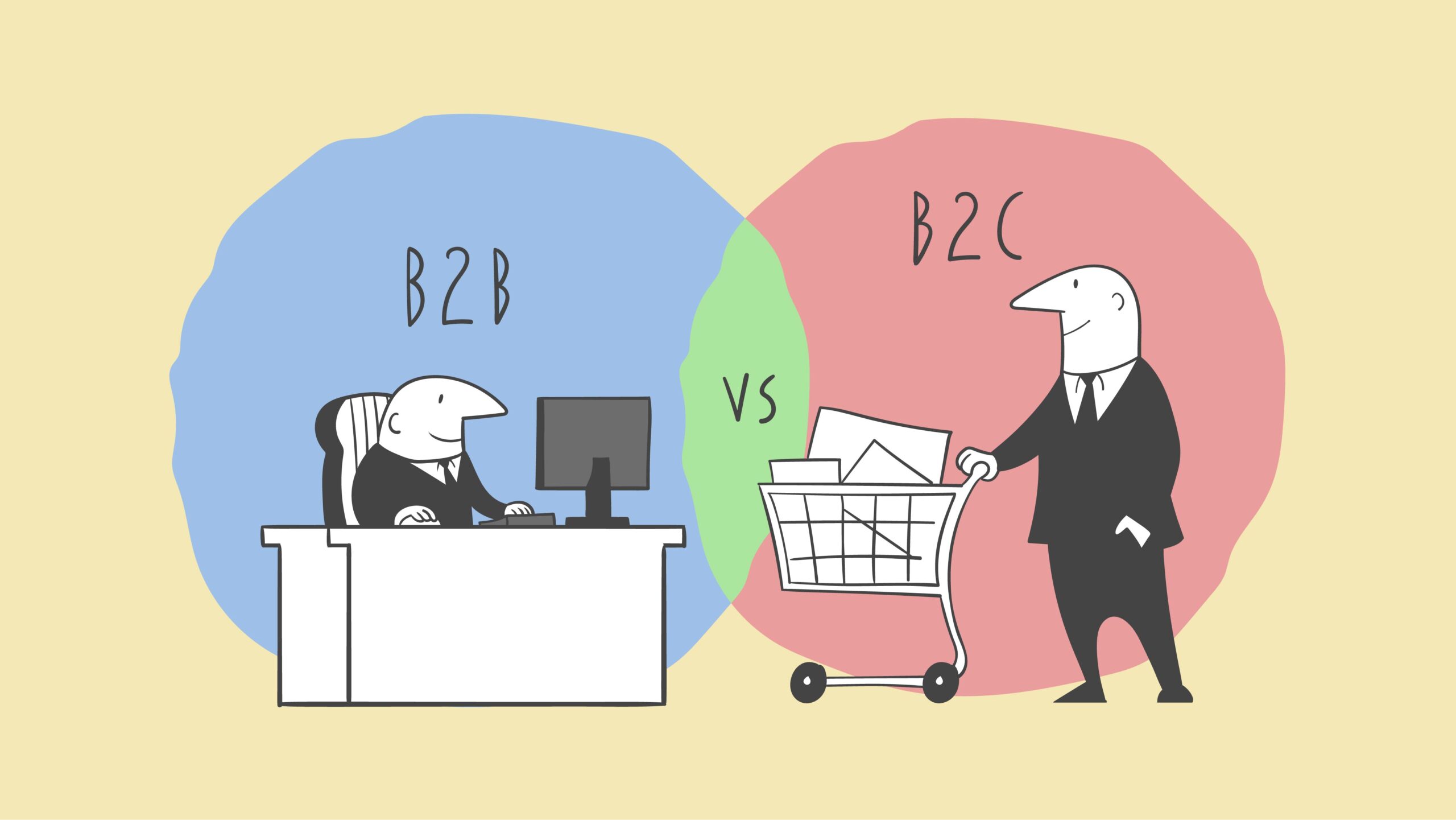
As a company operating in the B2B fintech industry, you already know that the customer doesn’t buy right off the bat.
A new fintech solution is generally a large investment, so the sales cycle is long and infinitely more complex than B2C.
It takes considerable thought and discussion, involving multiple stakeholders. Plus, since we’re dealing with financial services, there’s all the compliance and regulatory stuff to work through.
That’s why relying solely on online marketing efforts won’t make the sale.
You need experienced salespeople at the forefront to engage with decision makers, build a solid relationship, and demonstrate precisely how your solution addresses pain points.
Therefore, your online strategies need to focus on lead generation – not the end sale.
Offer real value to pique interest and encourage businesses to find out more.
We’re talking about building brand awareness and trust. Educate your target audience on how the emerging technologies you offer will benefit organizations and give them a competitive edge.
Provide quality content that answers the questions people are asking and gives people a solid reason to hand over their contact details.
Do this and you’re halfway there.
Then, your sales team can step in, take the reins, and (hopefully) close the deal.
B2B Fintech Marketing Strategy

With everything above in mind, a B2B content marketing strategy is about getting potential customers into your funnel.
The funnel itself needs to be designed around the complex decision-making process that fintech clients go through.
What does this look like in practice?
With B2B fintech marketing, it’s actually best to start with bottom of the funnel (BOFU) content.
These are your website’s sales pages optimized with buyer keywords. The phrases people are using to find a fintech product like yours.
For example, if someone is Googling “fintech app for digital payments,” the need is already there.
Bolster your sales content with plenty of social proof. Get your reputation out there, on your website, as well as the wider internet.
Next, create lead magnets that your ideal customers are searching for. These are the strategies that drive prospects into your funnel via valuable content, advertising, and so on.
Show up for social media. The more you engage, the more business leaders will know who you are.
Once they’re on your email marketing list, social media accounts, etc., keep hitting them with value until they’re nicely warmed up.
Then, and only then, will they be ready to receive a pitch from your sales team.
Case Studies, Video Demos, and Slide Decks
Your website needs to act as your best sales agent, working 24/7 to deliver optimized BOFU fintech marketing.
Remember that you’re dealing with multiple stakeholders, so your website requires tailored pages that speak to these people.
An executive wants to know ROI, while a compliance officer cares about risk.
Create separate sales pages that address each perspective directly. This way, every decision-maker can find the information they are looking for in order to move forward.
Case studies and testimonials are essential.
They show what your fintech firm is capable of and how your products address the real-world needs of each company you work with. Businesses need this social proof to reduce perceived risk and validate that your solution delivers on its promises.
Video product demos are equally important.
They explain complex products or services in-depth and convey information that can’t be achieved by text alone. Plus, they can form part of your video marketing strategy, especially if they link to or from your YouTube channel.
Likewise, slide decks are better than text for simplifying technical information. Plus, slides can be repurposed for webinars, pitches, and other fintech marketing content.
Lead Magnets

We now know, B2B fintech marketing is all about the lead.
And to gain quality prospects, you have to offer valuable content in the form of a lead magnet.
Businesses tend to look for resources that provide education or industry insights, or they want interactive tools that help them in some way.
So, what you should be looking to create are:
- Free tools and calculators like cost-savings estimators, compliance readiness checkers, etc. Take Wise, for example. It provides free business calculators for checking fees, import duty, and sales taxes.
- Checklists, frameworks, and templates. For instance, PayPal offers various free invoice templates.
- Industry reports and white papers, such as the Top 5 Lending Trends white paper offered by the Fyndoo lending platform.
- Ebooks are another option, like Plaid’s offering that talks about five fintech startup success stories.
Another on-trend lead magnet is to offer custom GPTs – a personalized version of ChatGPT designed for a specific audience or use case.
So, you could offer a “buyers guide” GPT, trained on your content and industry best practices, or a “compliance GPT” trained on the various regulatory frameworks to act as a trusted guide.
Whatever lead magnet you choose, make sure it’s relevant to your fintech brand and ties in perfectly with your value proposition.
Advertising

There’s no two ways about it. Paid ads are the fastest way to get your company in front of the right eyes.
While SEO and content marketing are best for sustained lead generation over time, advertising gives you quick wins and builds a solid list of prospects right off the bat:
- Google still holds around a 90% market share for global searches. Therefore, placing Google ads is an absolute given.
- LinkedIn is excellent for B2B paid ads. It is, after all, the largest online professional network. The platform contains over one billion business professionals and decision makers, plus you can target specific industries or job titles.
- Another platform to focus on is Facebook. It still has over three billion users, with over 200 million businesses present on the platform. That’s a lot of eyes you can get in front of.
- We also expect ChatGPT to start running ads sooner or later, so this will be worth jumping on when it arrives.
Since the point of running ads is to gain leads, you don’t want to focus on customer acquisition.
Instead, think sponsored posts containing educational content or trends that encourage the reader to click through to your website.
SEO
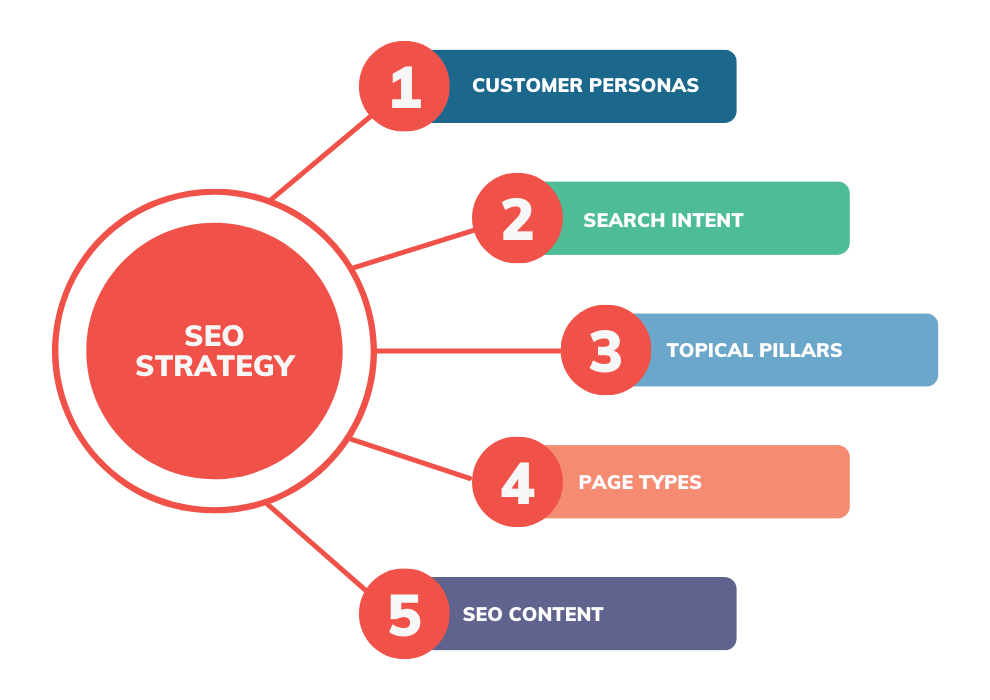
Marketers always stress the importance of fintech SEO, and you shouldn’t underestimate this.
Well-optimized, high-quality content marketing is what will connect your brand with decision-makers at the exact moment they’re actively looking for solutions.
Consider this:
- You want your fintech business to show up early in a business’s research phase. SEO ensures this.
- Ranking for industry keywords positions your fintech company as an expert and credible resource.
- SEO supports the entire funnel, from building awareness to the customer who is close to a decision.
SEO should weave throughout all your fintech marketing methods (website, blog, social media, etc.).
Why? Because it compounds over time.
Paid marketing campaigns stop when you stop spending. In contrast, strong rankings can continue to generate leads long-term without incurring additional cost.
The trick is to focus each page or content piece on a single keyphrase:
- Optimize sales pages with the keywords buyers are searching for
- Create blog posts that target educational queries
- Use intent-based keywords across different funnel stages
- Update older content with fresh information (especially vital for financial services, where information falls out of date fast)
It can help to use a fintech SEO agency (like us!) for the job. SEO is a challenging beast, and using an expert will get you off the ground quicker.
Social Media
Don’t just rely on paid ads. Social media marketing also involves setting your brand up on relevant platforms.
These are the places that businesses hang out, so use them to drive customer engagement and awareness.
Let’s break them down:
- LinkedIn: We’ve already established that for B2B social media, LinkedIn is the place to be. Post often and share thought leadership, insights, and expertise. Join groups to make connections with business leaders.
- X: Also full of decision makers, but it moves at a rapid pace. Engage in industry-relevant conversations and respond to queries in real-time. Share industry trends, news, tips, and other “hot” information.
- Reddit: This social media network is all about driving customer loyalty and trust through contributing valuable information. Reddit ranks high in organic search results (often outranking brand pages), making it an important tool for influencing buyer research.
Other platforms like TikTok and Instagram are better suited to B2C, but they could work for B2B. The key is to research and find where your ideal clients are.
You can also partner with relevant social media influencers. This is a great form of fintech PR because these people have fiercely loyal followings who listen to what they talk about and recommend.
B2B Fintech Marketing with GB Digital
There are plenty of strategies you can apply to kickstart lead generation and build a healthy pipeline of prospects.
However, it doesn’t hurt to have an expert fintech marketer on hand!GB Digital is a fintech marketing agency specialist. We work with startups and established businesses to deliver optimized content that gets results. Get in touch for your free Discovery Call today.